Little did I know at the time, when my mother asked me to go buy bread and milk from the shop, that my life would change quite drastically from then on. I had just turned 14 years of age and was expected to help with the usual household chores and errands.
It was 1964, during the height of apartheid in South Africa. A significant law at the time – The Group Areas Act, stipulated that White, Coloured, Indian and African people lived separately in their own areas. We lived in an area Adcockvale extension overlooking an Industrial township and a coloured area called Gelvandale. Separated by law, Industry and a major road, I realised that the shop in Gelvandale was a mere 200 metres away compared to the 2km walk where white people generally shopped. That day I decided to cross Burt Drive into Gelvandale to buy the bread and milk. Was I naïve or was I brave? I don’t know but I took the shorter option. I recall now this was somewhat like Robert Frost’s poem “The road not taken” “I shall be telling this with a sigh somewhere ages and ages hence; two roads diverged in a wood and I – I took the one less travelled by and that has made all the difference.” As I reflect years later I ask myself the question “What made all the difference in my life that day?”
- I discovered as a white child I was warmly greeted by people in Gelvandale on my way to the shop.
- That the shopkeeper served me like any other customer.
- That I faced my own fears and prejudice. Something was awakened in me. A new consciousness was born – that people are people regardless of their race.
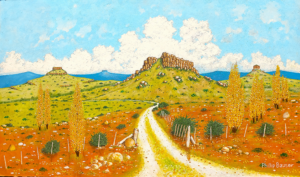
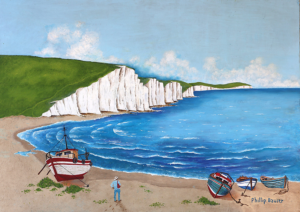
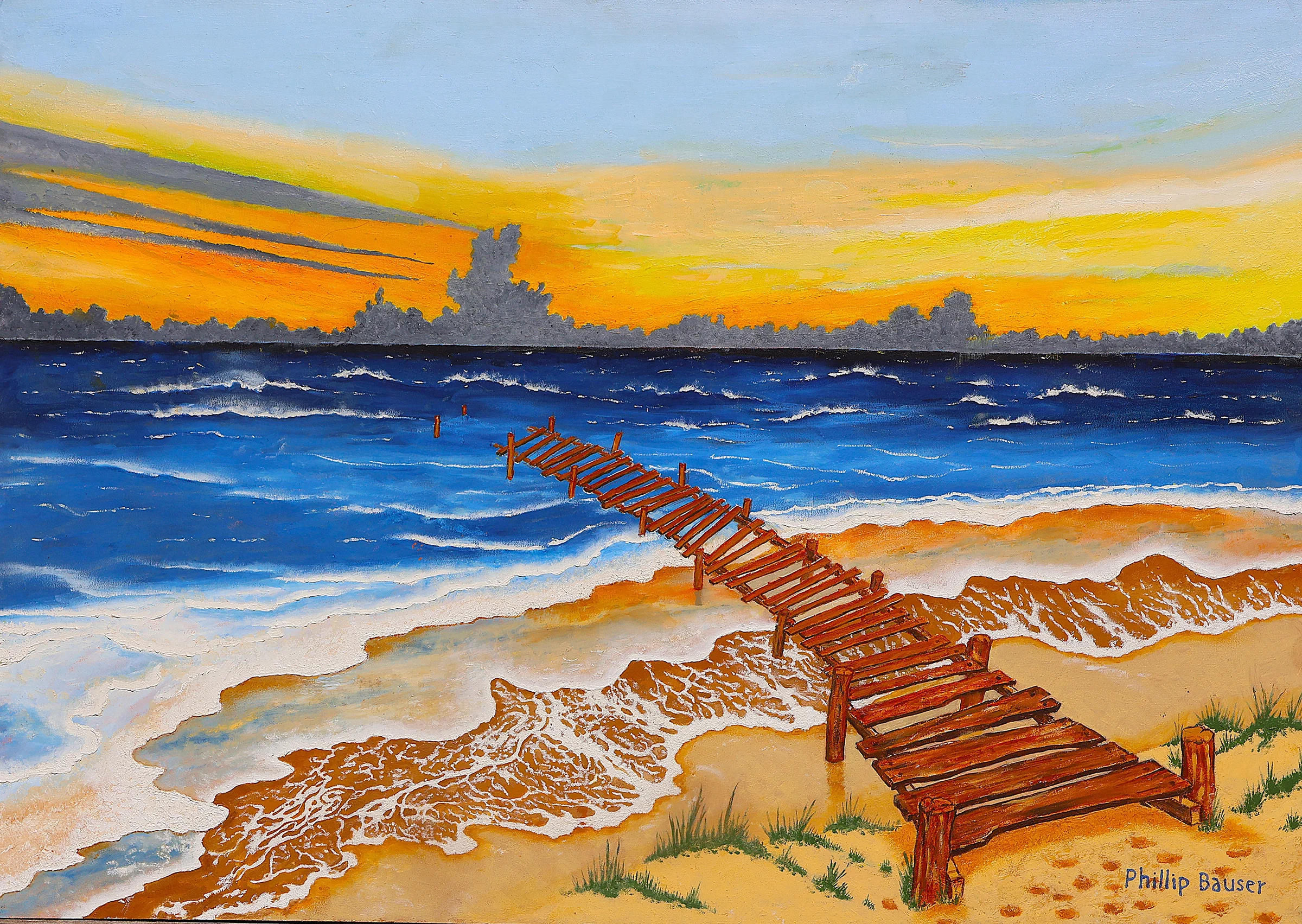
- That unknowingly I had walked into my future – I had walked to the edge.
I rather like what John Green says about this notion, “There have always been the ones willing to go to the verge of the horizon where the known world disappears into mystery and uncertainty, to lean out over the raw edge of our own fear and then take another step.”
David Bowie reminds us of something similar, “ If you feel safe in the area of your life step into the water a little out of your depth and when your feet are not touching the bottom you are just in the right place to do something creative and exciting.” “Living this way has its risks and dangers, yet asks fair minded people to move in that direction. “
Salmin Rushdie challenges all creatives: “It is the artists role to pace this periphery by force or by choice. Powerful forces in society don’t want us at the edge. Censorship is a clear blockade to the fertile and necessary soil of creation that exists on the edge.”
Kurt Vonnegut confirms this reality:”It is plain and clear out on the edge you see all kinds of things you can’t see from the centre. “This is not unlike what Jesus did with his friends when he challenged them “Come let us go to the other side”
There are many and varied partakers who stand on the edge – Journalists, poets, musicians, writers, war correspondents, artists, social activists, political prisoners, prophets, dancers. All these and many more help us to see life and the world differently. There are many and varied consequences of stepping from the edge.
- When my sister and her husband joined a few others on a guided walk in the Kruger national park, they stepped out of the safety confines of their fenced camp. In doing so they discovered the beauty and tranquillity of the bushveld and the thrill and excitement of experiencing the wildlife close up.
- When Neil Armstrong stepped out of the lunar module onto the surface of the moon- “One small step for man, one giant leapt for mankind.” He unleashed a renewed process in space exploration.
- When Nelson Mandela walked out of prison after 27 years, he opened the door of hope and freedom for millions of people within South Africa- a new political dispensation was born.
- During wartime the truth is often compromised by Governments attempt to control the narrative through censorship. When war correspondents reveal and tell the real story, they help us to see what is really happening.
Generally speaking, we can be clouded by the norms and values of society and not seek the other side. Sometimes overcome by life’s struggles we are prevented from seeing the beauty and or horrors around us or on the horizon. We remain stuck and not able to change. Stepping from the edge enables a freedom to find our true self and enter a life and world of new possibilities for ourselves and others.