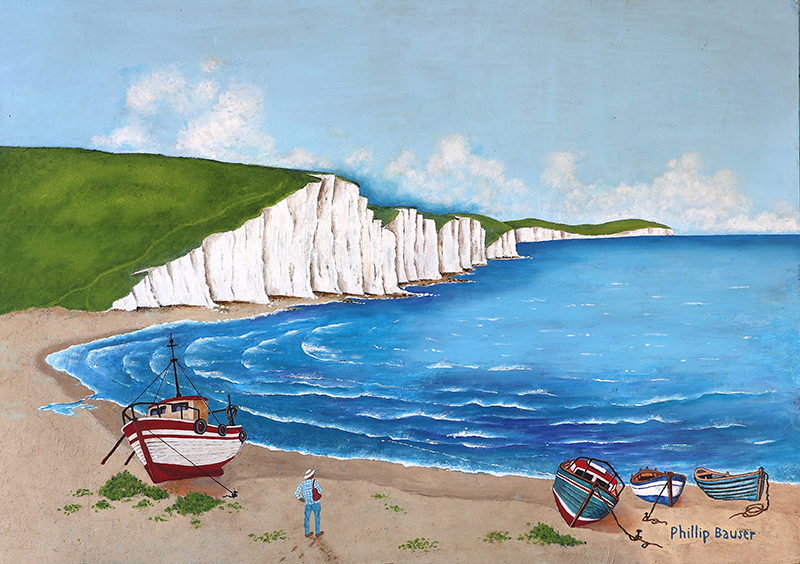
The ferry nudged slowly out of the harbour at Calais (France) and nosed its way towards Dover England. We were on our way to visit elderly Aunts in Devon. After a refreshing cup of tea in the lounge of the ferry we stepped out onto the deck. It was a pleasant summers day, the sea was calm and after a while in the distance we saw the faint outline of the white cliffs of Dover. The excitement was palpable among the travellers witnessing these iconic cliffs for the first time. These same cliffs meant so much to so many different people over the years.
For migrants crossing on frail boats the sight of the white cliffs of Dover means a chance of freedom from war and famine. The cliffs represent an opportunity for a new beginning.
For us the white cliffs of Dover meant a gateway and opportunity to see two elderly aunts. In a strange way they also represented family roots. In a sense the cliffs were a call to come home.
In 1940, 338,000 Allied soldiers were stuck on the beach at Dunkirk trying to escape the advancing German infantry. A call went out and between 26th May and 4th June 1940 a flotilla of merchant boats, fishing vessels, yachts, lifeboats and pleasure boats made their way across the channel to Dunkirk to assist in the evacuation of the soldiers. The sight of the cliffs for the soldiers would have been a deeply emotional experience, The evacuation called the “Miracle of Dunkirk”, would have offered mainly British troops on glimpsing the cliffs a feeling of hope and freedom and the strong realisation they were “Going Home”
When Vera Lynn sang, “There’ll be blue birds over the White Cliffs of Dover”, it pointed to a new tomorrow of joy and laughter.